
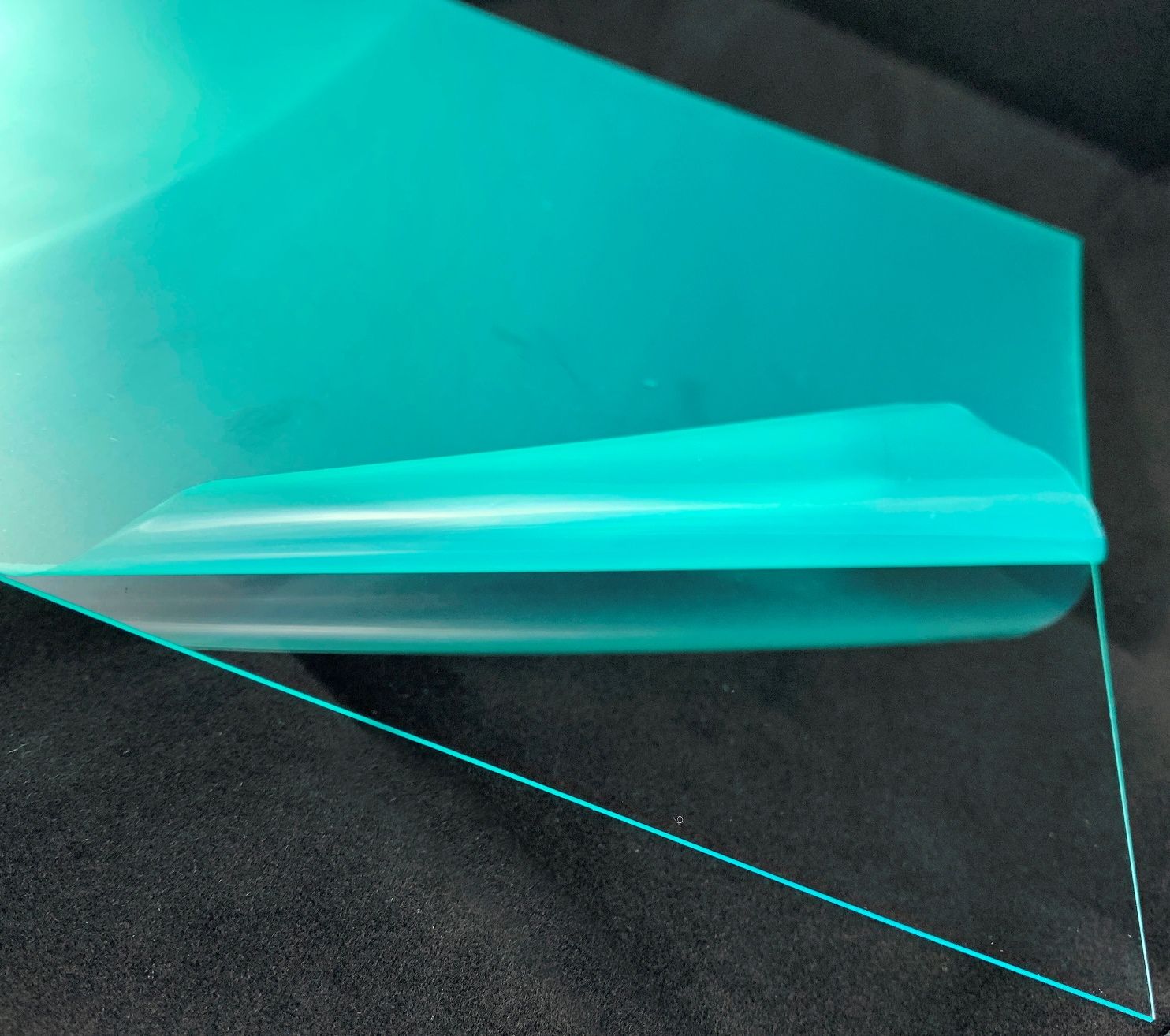
How to Choose the Right PE Protective Film
Choose a PE protective film based on the surface condition, required adhesion strength, processing temperature, application duration, and removal requirements. Co-extruded protective film is generally suitable for smooth and even surfaces, while adhesive-coated protective film provides more stable adhesion on rough, textured, patterned, or uneven surfaces. Sample testing is recommended to confirm compatibility with the substrate and actual processing conditions.
Co-Extruded vs. Adhesive-Coated Protective Film
| Comparison Item | Co-Extruded Protective Film | Adhesive-Coated Protective Film |
|---|---|---|
| Adhesive Structure | The outer layer uses LDPE, while the adhesive inner layer uses EVA or another tacky polymer material. | The outer layer uses PE or PET, with a chemical adhesive coating applied to the inner surface. |
| Manufacturing Process | The film layers are formed together through a co-extrusion process. | A PE or PET base film is produced first, followed by adhesive coating and drying. |
| Advantages | Lower production cost and a lower risk of residue associated with coated adhesives. | Provides more stable adhesion on rough, uneven, textured, or patterned surfaces. |
| Considerations | May not provide sufficient adhesion on rough, uneven, or patterned surfaces. | Adhesive residue or transfer should be evaluated according to the substrate, processing temperature, application duration, and removal conditions. |
Which Protective Film Is Suitable for Your Application?
Co-extruded protective film is generally suitable for smooth and relatively even surfaces when cost efficiency and clean removal are important. Adhesive-coated protective film may be more suitable for rough, textured, patterned, or uneven surfaces that require stronger and more stable adhesion.
Final film selection should also consider the substrate material, surface treatment, required adhesion level, lamination or processing temperature, application duration, indoor or outdoor conditions, and residue requirements. Sample testing is recommended before full-scale production.
PE Protective Film Selection by Surface Material and Lamination Temperature
Use the following selection chart to compare available PE protective film models according to the machine lamination temperature and the surface material to be protected. The chart can be used as an initial reference; final selection should still be confirmed through sample testing under actual processing conditions.
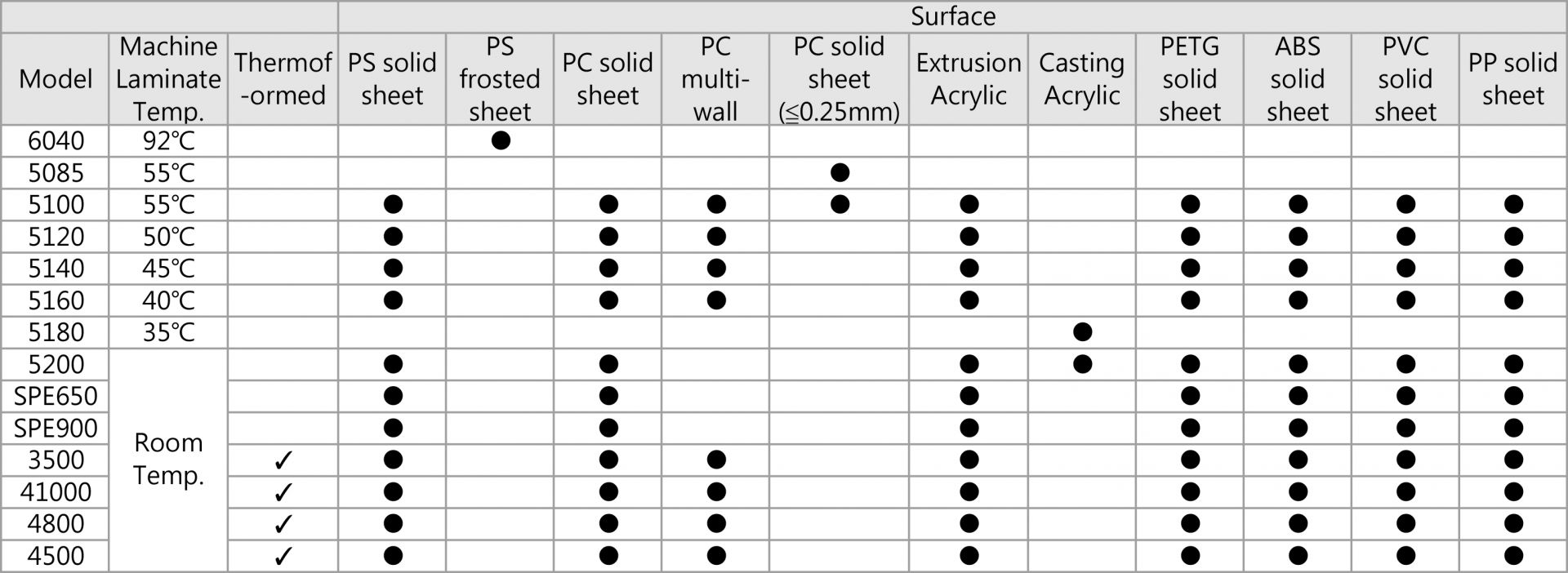
After identifying the suitable film structure, select the appropriate adhesion level and temperature resistance according to your processing requirements. Review the related PE protective film options below or contact Kao-Chia for sample evaluation and product recommendations.
- Related Products

PE Protective Film-Common Low Viscosity
5100, 5120, 5140, 5160, 5180, 5200
PE protective film produces with extrusion, and the adhesion layer material and the PE substrate...
DetailsPE Protective Film-Common Middle Viscosity
SPE650
LDPE protective film produces with extrusion, and the adhesion layer material and the PE substrate...
DetailsPE Protective Film-Common High Viscosity
SPE900
PE film produces with extrusion, and the adhesion layer material and the PE substrate are co-extruded...
DetailsPE Protective Film-High Temperature Used Middle Viscosity
4500, 4600
LDPE film produces with extrusion, and the adhesion layer material and the PE substrate are co-extruded...
DetailsPE Protective Film-High Temperature Used High Viscosity
31000.0
PE film produces with extrusion, and the adhesion layer material and the PE substrate are co-extruded...
Details